
The Massachusetts Lawn Care Calendar: Month-By-Month Guide For North Andover Homeowners
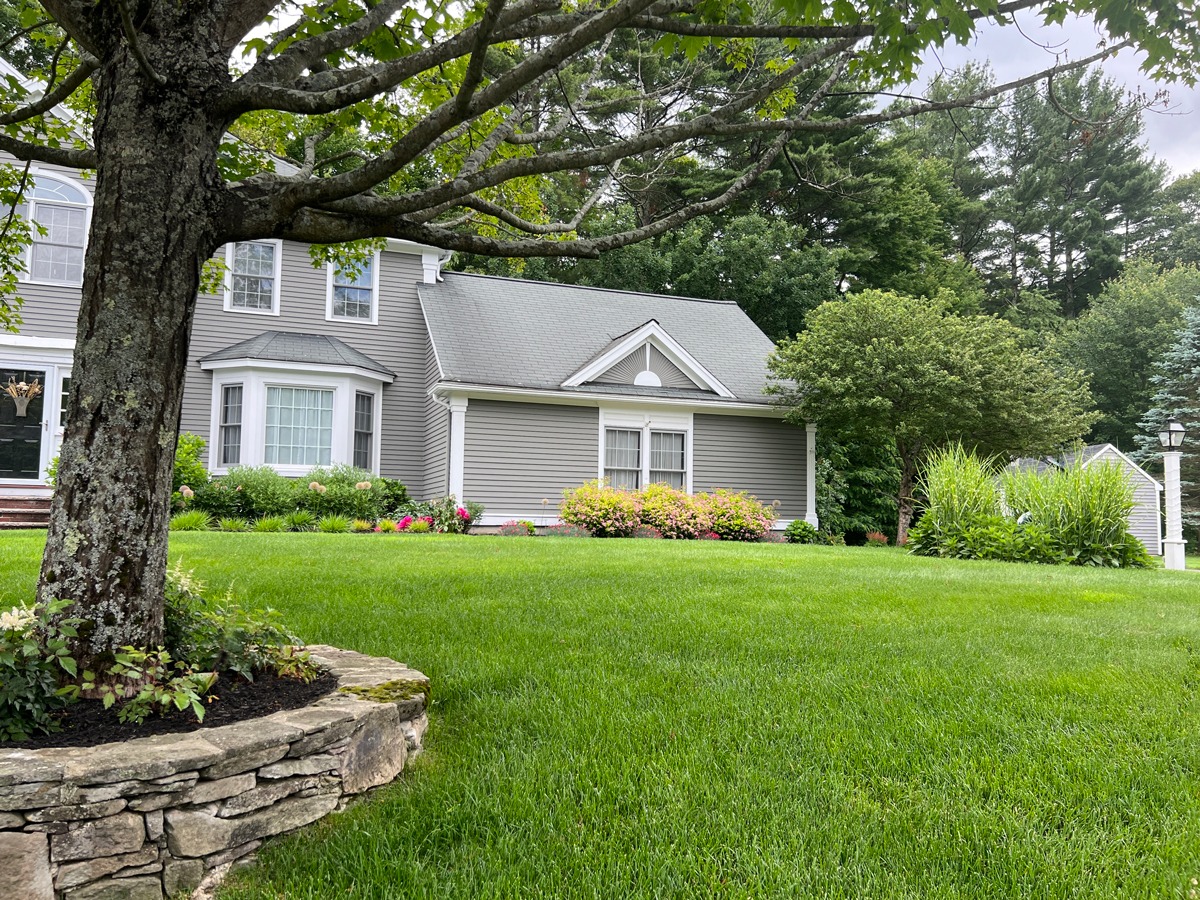
Your lawn does not respond to generic advice. It responds to weather patterns, soil temperatures, and seasonal shifts that are unique to North Andover and across Essex County. Following broad, non-regional recommendations is exactly why many Massachusetts homeowners struggle with patchy growth, fading color, and sudden weeds despite throwing plenty of time and money at their lawn.
Around here, timing mistakes, not lack of effort, are usually the root of lawn health issues. Forcing growth too early or waiting too late creates a cycle of constant frustration and wasted treatments.
To break that cycle, you need a localized lawn care calendar for Massachusetts conditions. While exact weather patterns shift from year to year, understanding your unique lawn care schedule ensures you always apply the right treatments at the moment they will be most effective.
If you want your property to look uniform and healthy across every season without the constant stress of and guesswork, this complete lawn care calendar for Massachusetts homeowners will walk you through the year step by step.
Why Massachusetts Needs Its Own Lawn Care Timeline

A true Massachusetts-focused lawn care plan must reflect how cool-season grasses behave in this region. These grasses grow best in spring and fall, slow down in summer heat, and go dormant during winter.
In North Andover, soil temperature, not air temperature, drives timing. Soil typically reaches 50°F in late April, which is when seed begins to germinate. Many national guides suggest March, which leads to poor results. UMass regularly updates on soil temperatures via The Landscape Message.
Local geography also plays a role. Properties near Lake Cochichewick require more careful product selection due to watershed considerations. More urban or suburban properties may deal with shade, moisture variation, or pest pressure differently.
Lawn care is a year-round job that requires expertise, understanding local weather patterns, and adapting based on what you observed last year. That’s why working with lawn-care professionals who understand Massachusetts conditions can make all the difference.
January And February — What’s Happening Under The Snow
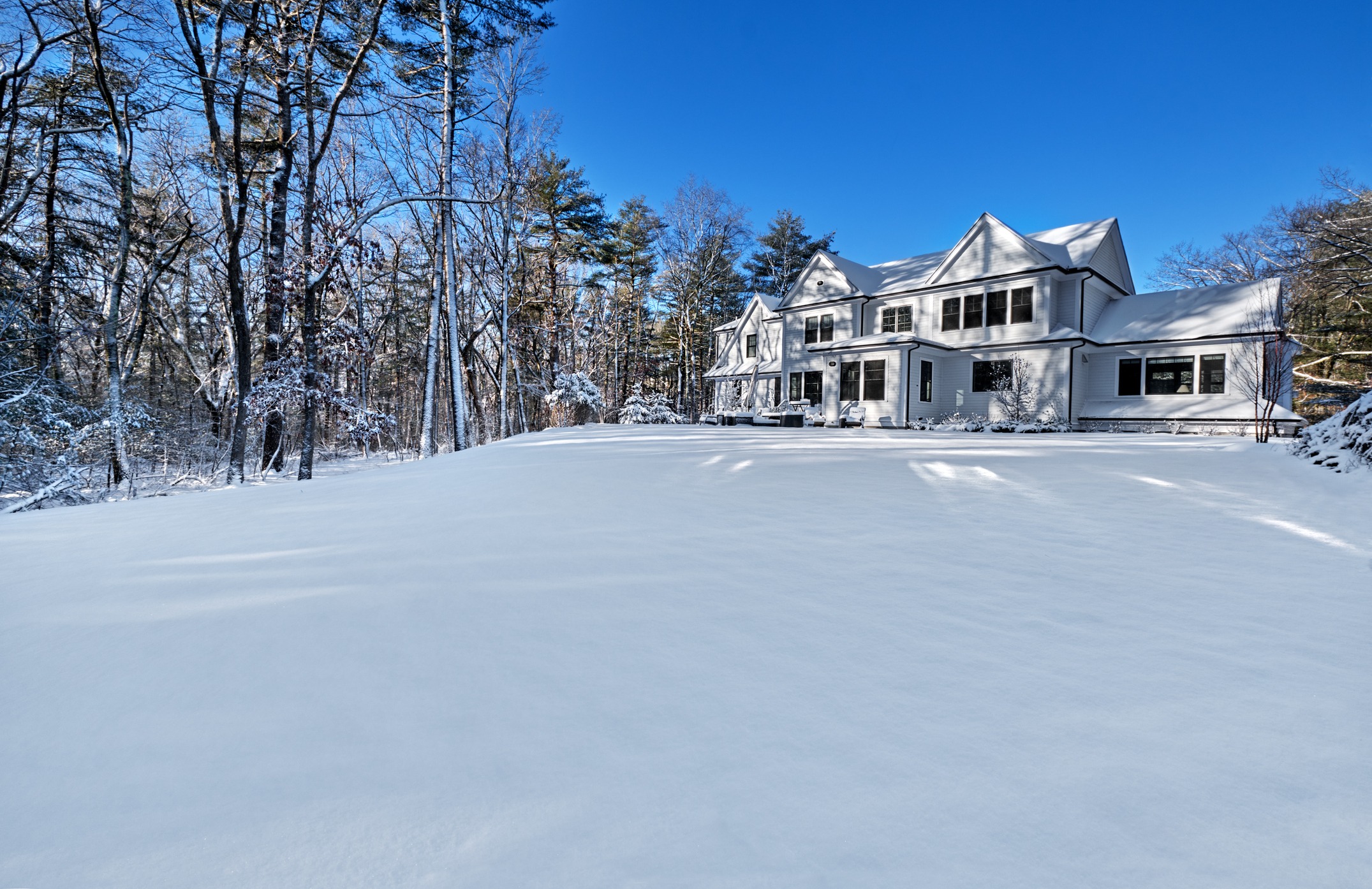
During winter, your lawn is dormant, but activity still happens beneath the surface. In wooded residential areas, voles often tunnel under snow cover. These small rodents can leave visible surface trails once the snow melts.
Avoid walking on frozen turf, if possible. Frozen grass blades are brittle, and soil compaction during freeze-thaw cycles can lead to weaker growth in spring. Repeated pressure in these conditions can damage the root structure, making it harder for your lawn to recover evenly once temperatures begin to rise.
Salt and ice melt products also affect lawn edges. Properties with long driveways or roadside exposure may see browning or thinning turf along the edges once temperatures rise and salt runs off into the soil. Over time, this buildup can alter soil conditions, requiring additional repair work in spring to restore healthy, consistent growth in these areas. Sand can be a better alternative for your driveway. If winter runoff or plows do permanent damage to your walkways or driveway borders, our Landscape Construction & Installation team can help reset and protect those structural edges for the spring.
No active lawn treatments are needed during this time. Focus instead on preparation. Make sure plow stakes and edge markers are in place before heavy snowfall so turf edges and beds remain protected.
March — The Pre-Season Window
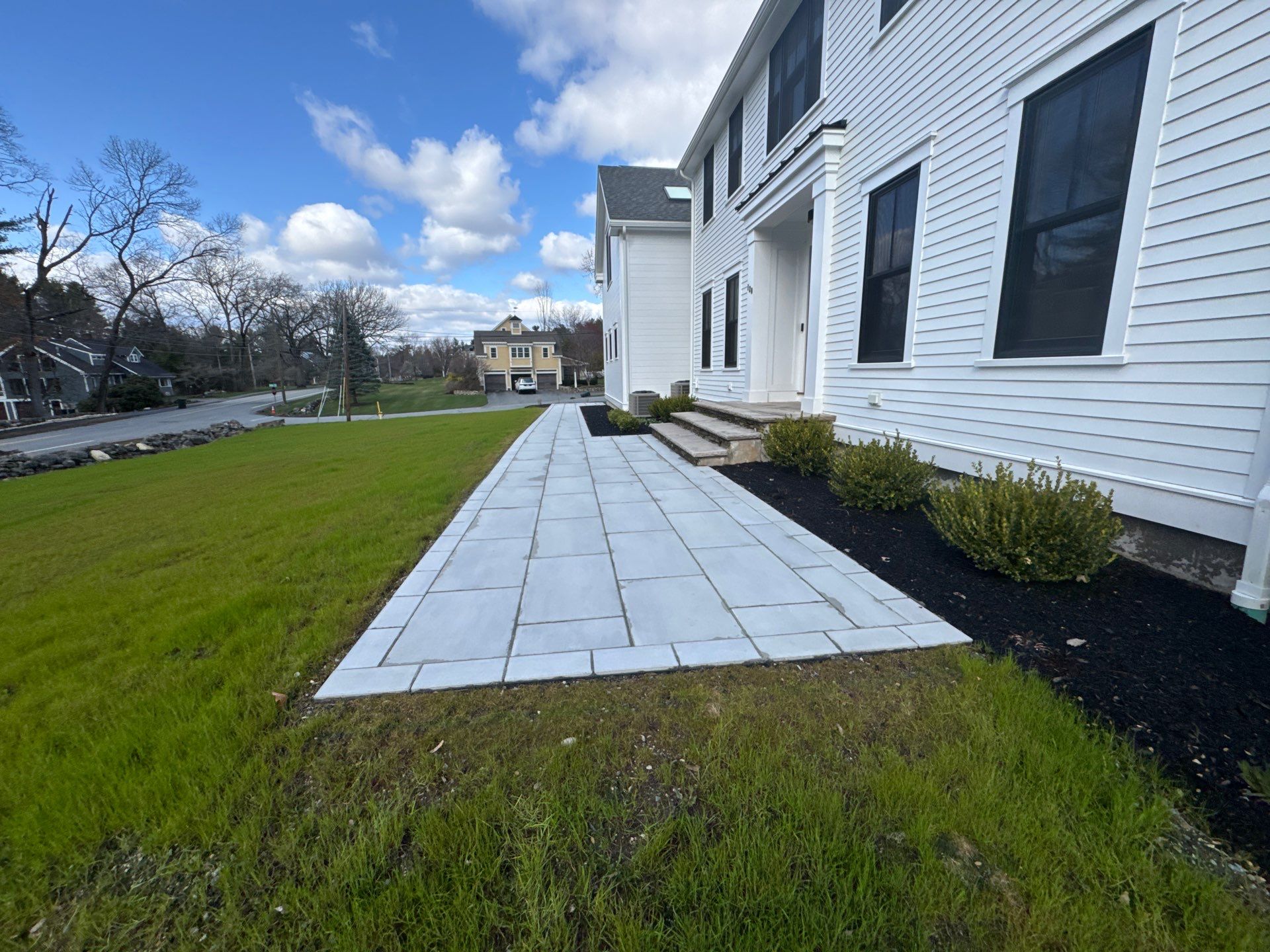
March is when your lawn begins to emerge, but resist the urge to act yet. Acting too early can create setbacks that last into summer.
Start with a visual inspection. Walk your property once the ground is firm. Look for winter damage, vole trails, and areas where snow lingered longer. Pay close attention to low spots or shaded sections, as these areas often experience delayed recovery and may require extra attention as the season progresses.
Snow mold may appear as gray or pink patches of matted grass. This is common in Massachusetts and often resolves with light raking and improved airflow now that the grass is free from snow. Allowing sunlight and air to reach these areas helps the lawn recover naturally without the need for aggressive treatment in most cases.
This is also a good time to prepare equipment. Sharpen mower blades and check irrigation systems. Clean tools now so they are ready when the growing season begins. Taking time for preparation now helps avoid delays and ensures your equipment performs efficiently once regular maintenance starts.
Do not rush fertilizer or pre-emergent products. If soil temperatures are still below 50°F, these applications will not perform as intended. For Massachusetts homeowners wondering when to fertilize their lawns, waiting until April or May is usually the better approach.
April — The Most Important Month For Massachusetts Lawns

April sets the tone for the entire season. Soil temperatures begin to rise, and your lawn becomes responsive to proper timing. This is the point where proactive spring lawn care routines begin to take shape, especially as soil temperatures in Massachusetts finally support active growth.
Track local conditions using the NOAA weather station at Lawrence Municipal Airport. This provides a reliable reference point for North Andover homeowners. Monitoring local data helps you make better timing decisions based on real conditions rather than estimates, especially during early spring when temperature changes can vary significantly.
Crabgrass prevention is a priority this month. Pre-emergent herbicide should be applied when soil approaches 55°F, which typically occurs around mid-April in Essex County. Applying at the right time helps stop weed seeds before they germinate, reducing competition and keeping your lawn looking more uniform.
Your first fertilizer application should use slow-release nitrogen. This supports steady growth without forcing excessive top growth too early. A balanced approach encourages stronger roots while maintaining a manageable growth rate that does not overwhelm your regular maintenance routine.
Spring cleanup also begins:
- Remove debris and fallen branches
- Redefine lawn edges and beds
- Prune damaged plant material
If fall aeration was skipped, early May becomes the final opportunity to correct compaction. For more detail, read our guide on spring and fall lawn cleanup for North Andover.
Spring is the point where most Massachusetts lawn care routines begin to take shape, especially as soil temperatures finally support active growth.
May — Green-Up And Growth Management
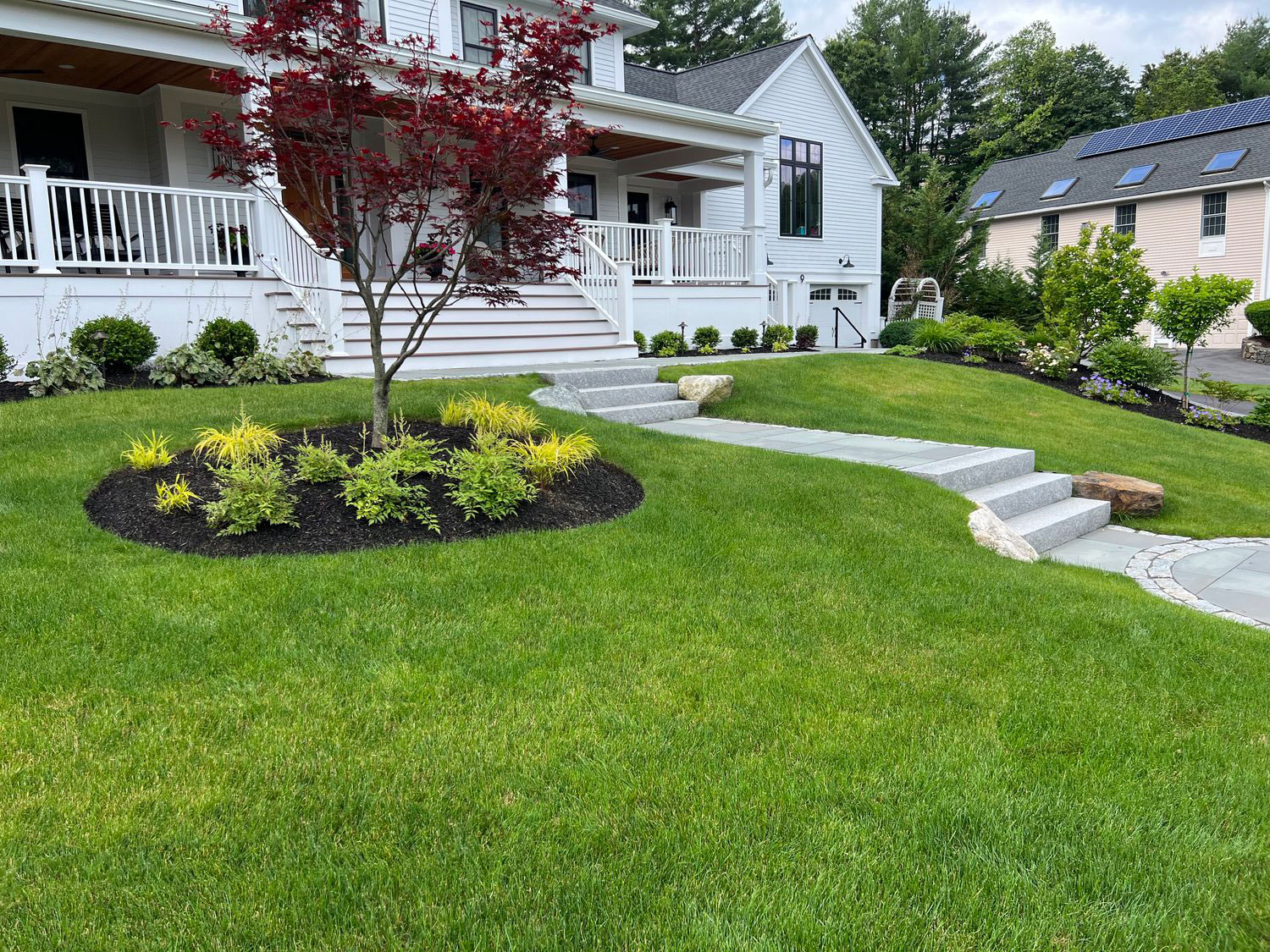
By May, your lawn should be actively growing. Consistency becomes your focus.
Mowing height plays a major role. Keep grass at a minimum of 3 inches, with 3.5 inches preferred for most North Andover lawns. Taller grass helps shade the soil and reduce weed pressure. It also supports deeper root growth, which improves drought resistance and helps your lawn maintain a fuller, more even appearance throughout the season.
If you follow a multi-step program, a second fertilizer application may be included this month. Keep it balanced and avoid overfeeding. Applying too much at once can lead to rapid growth that requires more maintenance and may stress the lawn as temperatures begin to rise.
Bare patches from winter damage can now be seeded. Soil temperatures above 55°F support germination, but moisture consistency is key. Regular watering and proper soil contact will help new grass establish more effectively and blend in with the surrounding turf over time.
Tick and mosquito control programs typically begin in late April or early May. According to the Massachusetts government, homes near wooded areas are at high risk and may benefit from early preventative treatment. Starting early helps reduce pest populations before they become more active and noticeable during the warmer months.
Following a lawn care schedule structured for the Massachusetts climate helps maintain even growth across your property.
June And July — Heat Stress Season
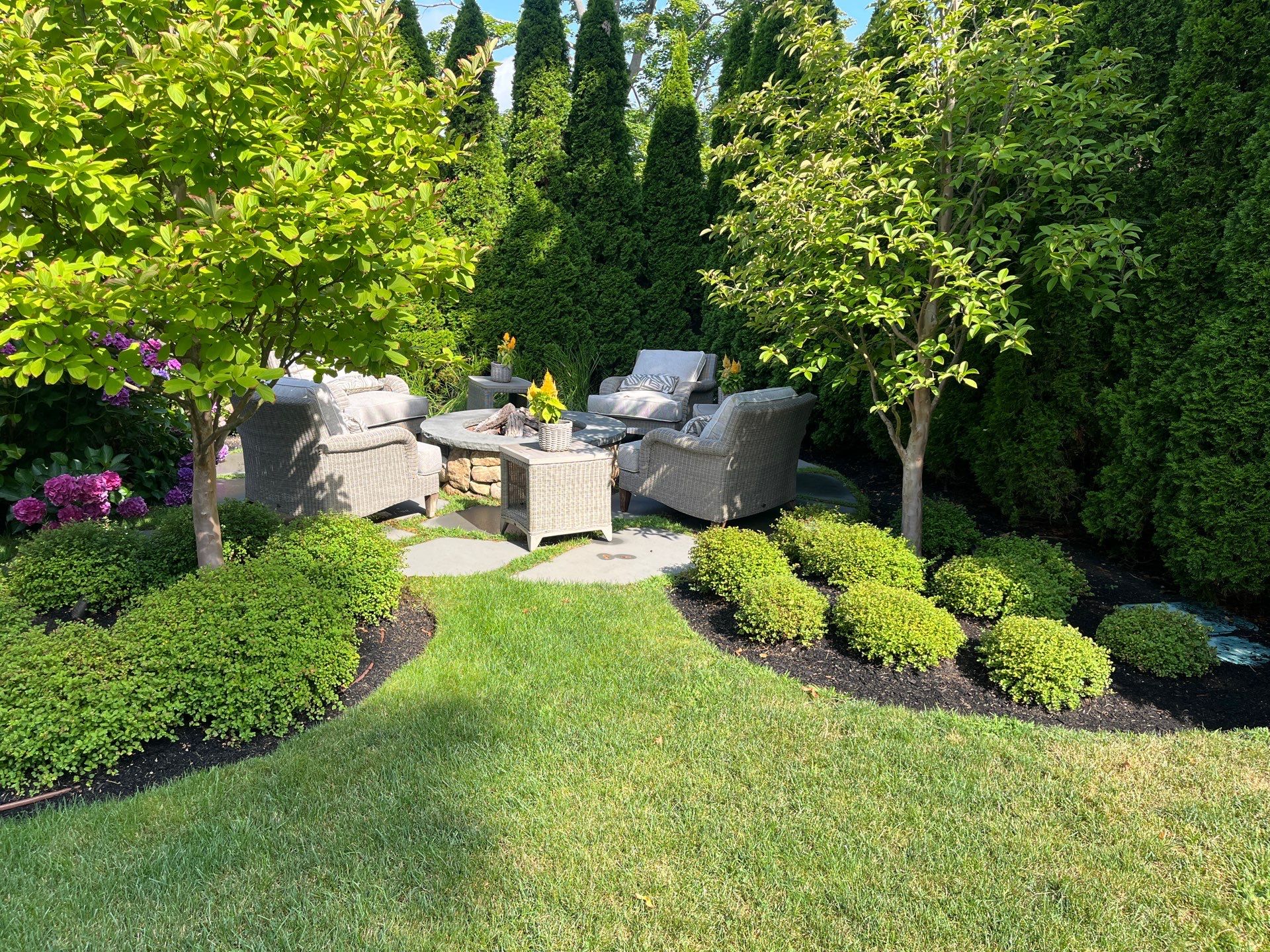
In Massachusetts, summer shifts your lawn care approach from growth to protection.
Raise mowing height to about 4 inches during July. Taller grass shades the root system and helps retain moisture. It also reduces stress from direct sunlight and supports stronger root development, which is essential for maintaining lawn health during extended periods of heat and limited rainfall.
Fertilizer use should be limited during this time. Excess nitrogen during heat can stress turf and reduce resilience. Overapplication may lead to rapid growth that the lawn cannot sustain, increasing the risk of browning, thinning, or damage during peak summer conditions. Put a pause on heavy feeding by early June at the latest.
Watering should be deep and infrequent to protect against developing weak root systems that dry out quickly.
Water as follows:
- About 1 inch per week
- Early morning application
- Avoid daily shallow watering
Late July is also when grub activity may begin. Japanese beetle and European chafer larvae are common in Massachusetts lawns. Watch for irregular brown patches or areas where turf lifts easily.
Following these lawn care tips for Massachusetts homeowners can help maintain stability through summer stress.
August — Transitional Month
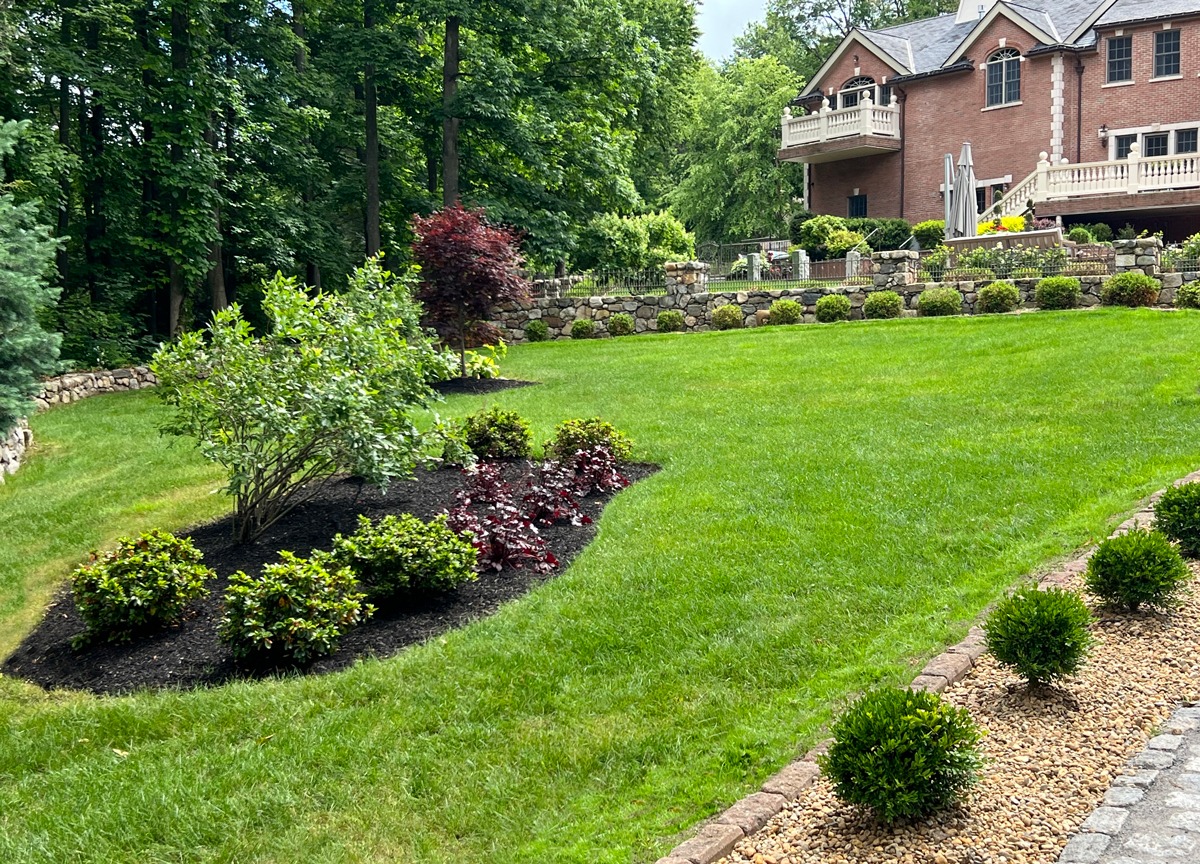
August is a planning month. Your lawn may still feel summer stress, but fall recovery is approaching.
Check for grub activity. If damage is confirmed, treatment should be timed accordingly.
Soil testing is also useful now, especially if it has been more than two years. Understanding pH and nutrient levels helps guide fall applications.
Mowing frequency may slow, but maintain proper height. Continue pest control through early fall, particularly in shaded North Andover neighborhoods.
This is also when you should begin preparing for overseeding and aeration. A well-timed fall plan can significantly improve turf density.
September And October — Recovery and Renovation
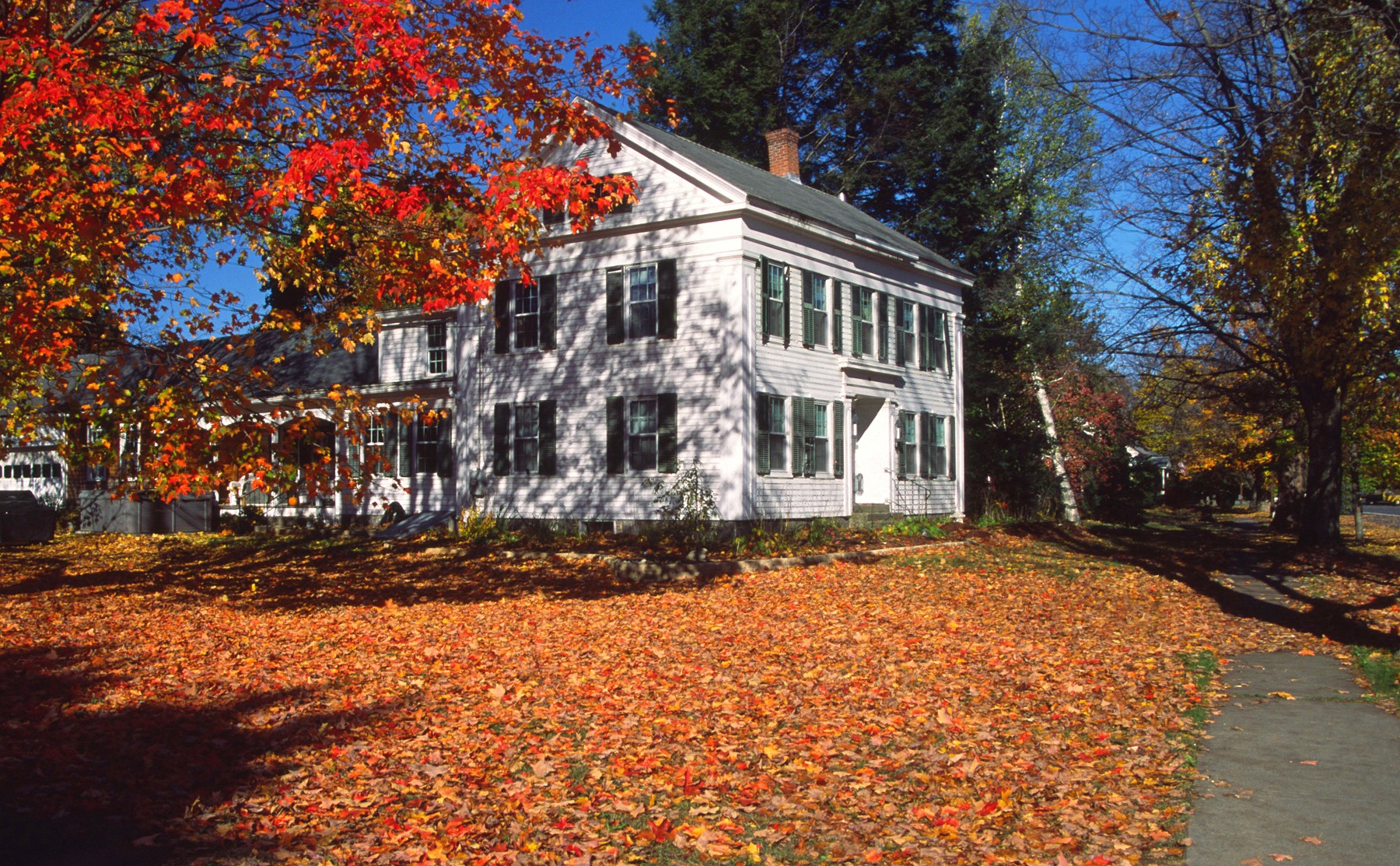
Fall is the most productive season for lawn improvement in Massachusetts. This is why timing your fall lawn care tasks correctly is so critical, as these months provide the best conditions for Massachusetts lawns to recover and build long-term density before winter.
September through mid-October are widely recognized as the best time for core aeration in Massachusetts. Overseeding should follow immediately after aeration. Cooler temperatures and consistent moisture create the right environment for new grass to establish.
Fall fertilizer applications are also important. A slow-release nitrogen application in mid-October supports root strength heading into winter. This timing allows nutrients to be absorbed efficiently while top growth slows, helping the lawn store energy and return stronger, thicker, and more resilient in early spring.
November — Close-Out Season
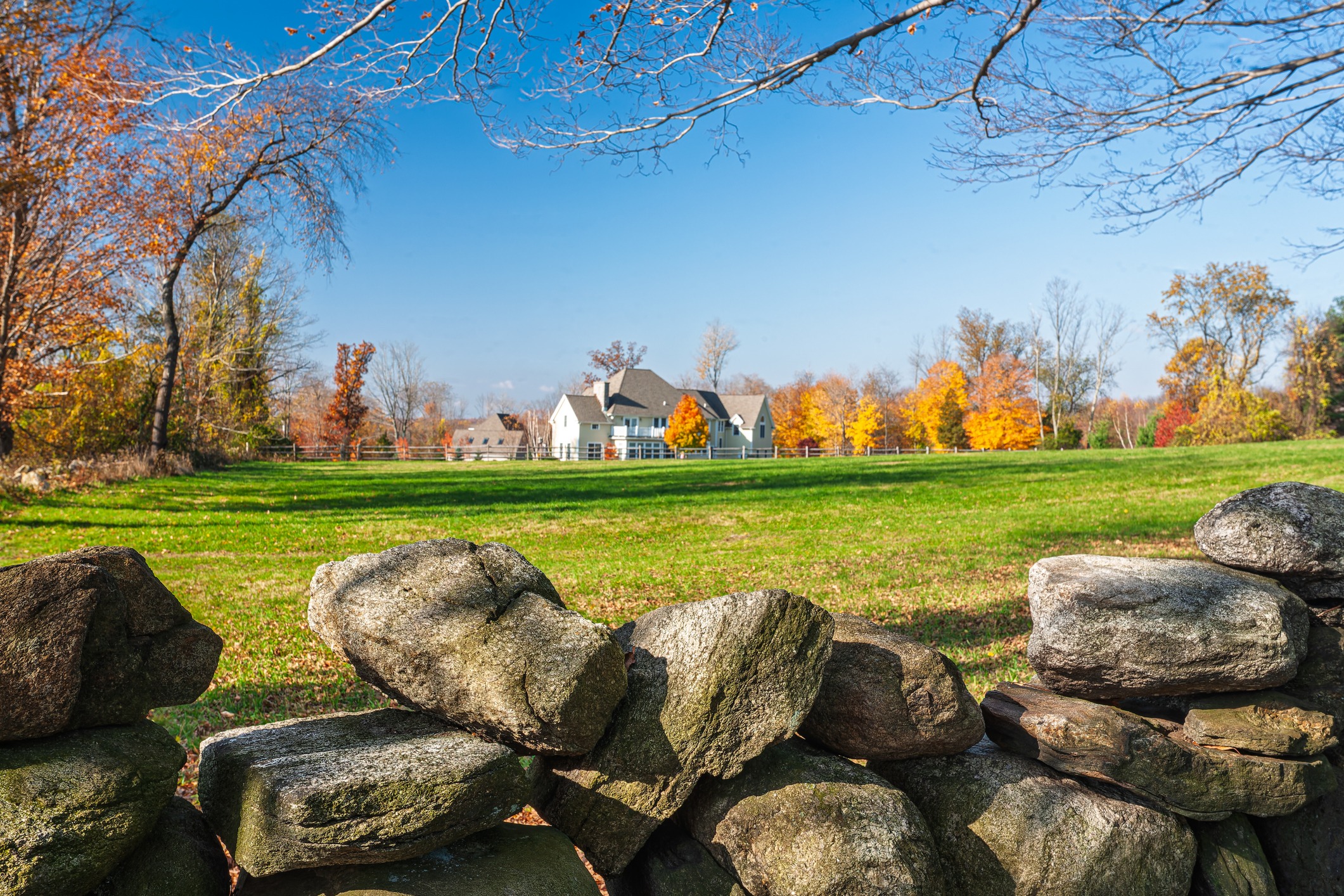
November is about preparing your lawn for winter.
The final mow should be set around 2.5 inches. This helps reduce the risk of snow mold without stressing the turf. Complete your final leaf cleanup and remove any remaining debris. Even small piles can damage turf over winter. Leaving organic material in place too long can trap moisture, limit airflow, and create conditions that weaken grass before dormancy sets in.
If your program includes a late-season fertilizer, this may be the time to apply it. Equipment should also be winterized. Drain irrigation systems, store tools properly, and prepare for freezing conditions. Taking these extra steps helps protect your investment and ensures your equipment is ready to perform efficiently when the next growing season begins.
This final phase ensures your lawn enters dormancy in a stable condition. If you’re planning ahead and want a structured approach, you can explore a full-season plan through professional our Lawn Care and Maintenance services.
December — Dormant Season Begins
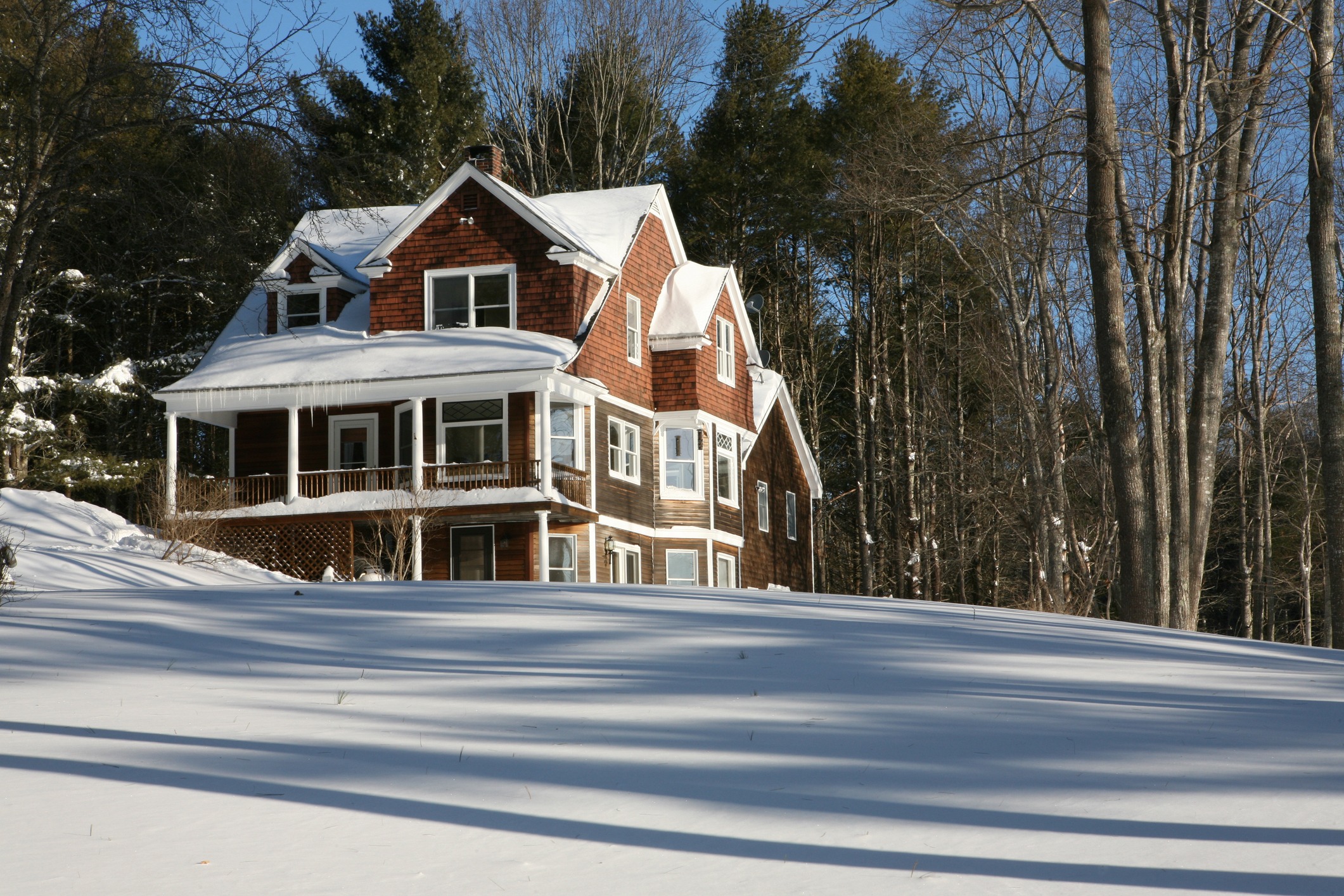
By December, your lawn is fully dormant. No active treatments are required.
This is the time to plan for the upcoming year. Review what worked and what did not. Identify areas that struggled and consider how to address them. Think about patterns you noticed throughout the season, including growth consistency, weed pressure, and how your lawn handled heat or heavy rain. This reflection helps you build a more effective plan moving forward.
Many Essex County homeowners schedule services well in advance. Booking early helps ensure consistent care when spring arrives. It also allows you to secure preferred service timing and avoid delays during the busy start of the season, when schedules tend to fill quickly across Essex County and surrounding areas.
If you want a broader look at long-term lawn strategies, visit our The North Andover Homeowner’s Guide.
Keeping Your Lawn Consistent Year After Year
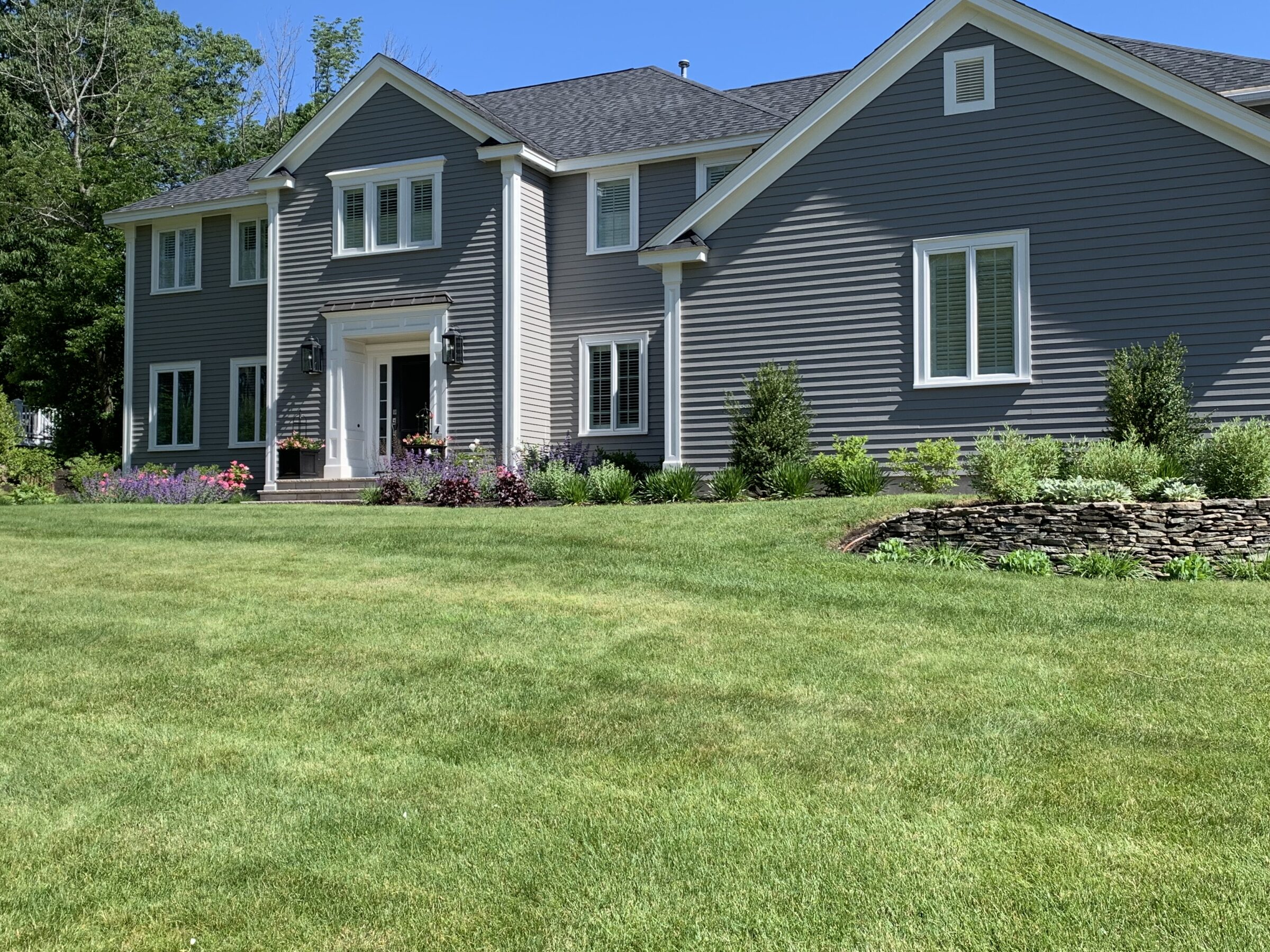
A strong lawn is built through timing, not guesswork. When each step aligns with local conditions, your property becomes easier to maintain and more consistent in appearance. North Andover properties vary; homes near Lake Cochichewick, shaded areas along Osgood Street, and open lawns near Salem Street all respond differently.
While tracking a calendar is straightforward on paper, having a professional team handle the execution is simply easier. That is why Downer Brothers Landscaping builds custom lawn programs specifically for North Andover yards. We back our local expertise with consistent crews, clear communication, and absolutely no chasing. You gain back time while your property receives the attention it needs.
If you want your lawn managed with consistency, attention to detail, and a clear plan across every season, Request a Consultation today and take the next step toward a more reliable property care experience.
Summary
Instead of following generic advice, using a lawn care calendar built for Massachusetts helps you follow the right timing for each season, making lawn care simpler and more consistent throughout the year. Instead of reacting to problems as they appear, you are working proactively with the natural growth cycle of your lawn. This approach supports healthier turf, reduces unnecessary treatments, and improves long-term results. By understanding when to seed, fertilize, mow, and prepare for seasonal changes, you create a routine that keeps your property looking well-maintained without added stress or uncertainty.
Tags: